Law, independence, and the presidency
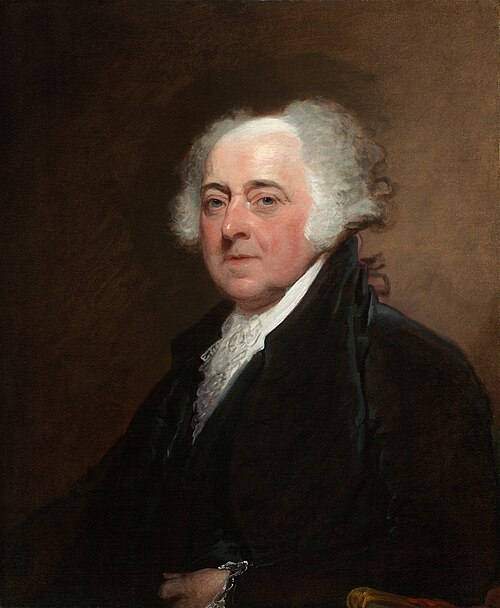
John Adams
1735–1826 · United States
Adams was born in Braintree, Massachusetts, in 1735, the son of a farmer and deacon, and became a lawyer after graduating from Harvard. He defended the British soldiers tried for the Boston Massacre because he believed no one should be denied counsel, and the acquittals he won earned him more respect than popularity.
In the Continental Congress he was among the earliest and most persistent advocates of independence. He nominated Washington to command the army, drafted much of the correspondence that built support for the cause, and helped negotiate the peace of 1783. He served as Washington's vice president and then as president from 1797 to 1801, steering a course between France and Britain that kept the young republic out of a wider war.
His presidency was embittered by the Alien and Sedition Acts and by the rise of party conflict, and he lost the election of 1800 to Jefferson. In retirement he wrote voluminously about government and religion, and he died at Quincy on the Fourth of July, 1826, the same day as Jefferson.
Gilbert Stuart · Public domain
Hosted
The evening before independence · 1776 · Philadelphia, Pennsylvania
The president and the sedition laws · 1798 · Philadelphia, Pennsylvania
Attended
A salon at Braintree · 1780 · Braintree, Massachusetts
Publius at table · 1788 · New York, New York
The general's table at Mount Vernon · 1790 · Mount Vernon, Virginia
The farewell dinner · 1796 · Philadelphia, Pennsylvania